An investor from Hong Kong was planning for their family's future amidst regional uncertainty. They needed a reliable 'Plan B'—a second passport from a peaceful, tax-neutral country that would not require them to renounce their original citizenship. Their research led them to Vanuatu's Citizenship by Investment program, but they needed to be certain: does the law in 2026 truly permit holding two passports?
Yes, it does. As of 2026, the Republic of Vanuatu officially recognizes and allows dual citizenship. Amendments to the country's main citizenship law created a definitive legal framework for foreign nationals to get a Vanuatu passport without having to renounce their original one.
Dual Citizenship - The status of a person who is a legal citizen of two or more countries simultaneously. In the context of Vanuatu, amendments to the Citizenship Act [Cap 112] specifically state, "The Republic of Vanuatu recognises dual citizenship," allowing a citizen of Vanuatu or another state to be granted this status.
Does Vanuatu Officially Recognize Dual Citizenship in 2026?
Yes. The Republic of Vanuatu officially recognizes dual citizenship. This policy is a huge shift from its previous stance, now firmly cemented in the country’s legal framework to attract investment and global talent.
The legal basis couldn't be clearer. The Vanuatu Citizenship Office confirms that amendments to the law "now recognise DUAL CITIZENSHIP." The government’s own consolidated legal text, available through the Vanuatu Trade Portal, explicitly says a person who is a citizen of Vanuatu or another country "may be granted dual citizenship."
This clarity is vital. Why? Because older versions of the Citizenship Act [Cap 112] contained clauses that banned dual nationality. Those sections have been completely superseded by modern amendments. Anyone researching the law must be sure they are looking at the current, consolidated version to avoid getting tripped up by outdated rules.
What is the Law Governing Dual Citizenship in Vanuatu?
The primary law is the Citizenship Act [Cap 112], along with its critical amendments. These amendments are what built the legal architecture permitting dual nationality, reversing the country's old policy.
For the most reliable understanding of the law, you should turn to the official government bodies themselves:
- The Vanuatu Citizenship Office: This is the department that manages and processes every single citizenship application.
- The Vanuatu Trade Portal: Here you can find the consolidated legal text of the Citizenship Act, which includes all the schedules and amendments detailing the rules for dual citizens.
Vanuatu's move away from a strict single-nationality policy was no accident; it was a deliberate legislative choice. The government amended the Act specifically to strengthen its Citizenship by Investment programs, like the Development Support Program (DSP), making it a far more compelling option for international investors.
What are the two main paths to citizenship in Vanuatu for foreign nationals?
While paths like birth and descent exist, foreign nationals almost always acquire citizenship through investment. The main route is the Development Support Program (DSP). Through this program, an individual makes a significant, non-refundable economic contribution to the nation in exchange for becoming a citizen.
The second path isn't a separate program but a protection for native-born citizens. The law now ensures that a Ni-Vanuatu (a native citizen of Vanuatu) who acquires a second citizenship abroad—say, through marriage or naturalization in another country—does not automatically lose their Vanuatu nationality as a result.
What Restrictions Apply to Dual Citizens of Vanuatu?
While Vanuatu welcomes dual citizens, it draws a firm line when it comes to political rights. This is a key trade-off for the benefits of a second passport, designed to protect national sovereignty.
According to the consolidated text of the Citizenship Act, a dual citizen is explicitly forbidden from getting involved in the country's political life. This means a dual citizen must not:
- Hold or serve in any public office.
- Stand as a candidate in national, provincial, or municipal elections. This is a hard-and-fast rule.
- Vote in any of the above elections.
- Take part in forming, funding, or holding a formal role in any political party in Vanuatu.
These public office restrictions and political restrictions ensure that the governance of Vanuatu stays in the hands of those who hold sole allegiance to the nation.
How Do I Apply for a Vanuatu Second Passport as a Dual Citizen?
Getting a Vanuatu passport is the final prize. The process begins with successfully acquiring citizenship, which for most foreigners means applying through a government-approved citizenship-by-investment program. The entire journey is managed by the Vanuatu Citizenship Office and must be handled by a government-authorized agent.
Here are the general steps:
- Engage an Authorized Agent: You cannot apply directly to the government. Your first move is choosing an agent officially accredited by Vanuatu to handle these applications.
- Initial Vetting: The agent will do a preliminary check on your background and fund sources. They do this to make sure you have a strong chance of success before you invest time and money.
- Application Submission: Your agent will guide you in compiling and submitting the detailed application. This file includes personal documents, police clearances, and financial statements. A small mistake here can cause major delays, so attention to detail is critical.
- Government Due Diligence: The Vanuatu government's Financial Intelligence Unit (FIU) performs a thorough background check on all applicants over 18, ensuring the program's integrity.
- Approval and Contribution: Once the FIU gives the green light, you'll be formally invited to make the required financial contribution to the Development Support Program.
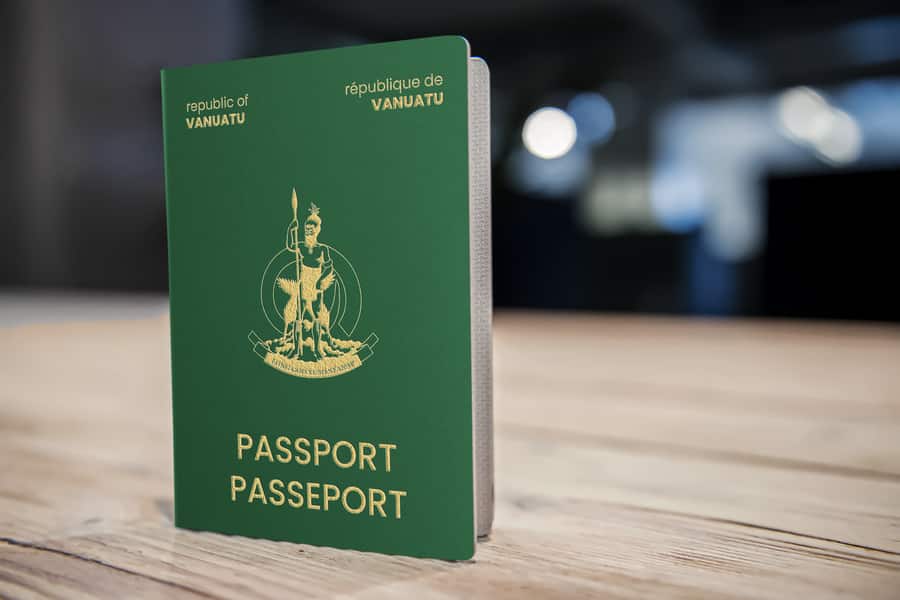
- Citizenship and Passport: After your contribution is received and processed, a Certificate of Naturalization is issued. With this certificate in hand, you are officially a citizen of Vanuatu and can immediately apply for your passport.
Can you buy a passport from Vanuatu?
That phrasing is common, but it's not quite right. You don't "buy" a passport. Instead, you legally obtain citizenship by making a prescribed, non-refundable donation to the country's Development Support Program (DSP). This entire process is enshrined in law. Once you are an official citizen, you are then entitled to apply for a Vanuatu passport.
Is it hard to get Vanuatu citizenship?
The process is famously one of the fastest of its kind. But fast doesn't mean "easy." The real challenge is meeting the strict due diligence and eligibility criteria. Applicants need a spotless criminal record, good health, and solid proof of the legal source of their funds. The financial bar is also significant. So, while the procedure itself is straightforward for a qualified person, the vetting is tough, and applications are absolutely denied if red flags appear.
What are the Main Benefits of a Vanuatu Second Passport?
For global citizens, investors, and their families, a Vanuatu passport offers several powerful strategic advantages.
| Benefit Category | Specific Advantage |
|---|---|
| Global Mobility | The Vanuatu passport unlocks visa-free or visa-on-arrival access to a significant number of countries worldwide, including the UK. This massively enhances freedom of movement for both business and leisure. |
| Tax Optimization | Vanuatu is a tax-neutral country. For residents and non-residents alike, there is no personal income tax, capital gains tax, wealth tax, or inheritance tax. This is often the primary driver for applicants. |
| Personal Security | A second passport from a peaceful, politically neutral Commonwealth nation is the ultimate 'Plan B.' It provides a safe harbor for you and your family if political or economic instability strikes your home country. |
| Speed and Simplicity | When compared to other citizenship-by-investment programs, Vanuatu's process stands out. It's known for its efficiency and clear rules, often taking just a few months from application to passport for a well-prepared candidate. |
This article is published by an independent law firm for informational purposes only and does not represent or claim affiliation with any government body, international organization, or official authority.
Frequently Asked Questions
How much is Vanuatu citizenship?
The main cost is the one-time, non-refundable contribution to the government's Development Support Program (DSP). For 2026, that contribution starts at $130,000 USD for a single applicant. The amount goes up for a couple or a family. On top of that, you'll have government fees, due diligence fees, and agent fees. You must consult an authorized agent to get the current, official fee schedule.
Can a US citizen have dual citizenship with Vanuatu?
Yes. Vanuatu's laws permit it, and the United States also allows its citizens to hold a second nationality. A US citizen can legally acquire citizenship in Vanuatu and hold both passports. The key is that they must meet all of Vanuatu's application requirements while also continuing to fulfill any US obligations, like filing taxes with the IRS, regardless of where they live.
Do you have to renounce your citizenship for Vanuatu?
No. Absolutely not. You do not have to renounce your current citizenship. The whole point of the amendments to Vanuatu's Citizenship Act was to specifically create a legal pathway for dual citizenship. This change means you can become a citizen of Vanuatu while keeping your original nationality and passport.